For decades, nitrogen has been one of the most powerful drivers of crop productivity. It fuels plant growth, supports protein formation, and directly influences yield potential. Few inputs have such a direct and measurable impact on farm performance.
And yet, despite its importance, nitrogen management in many parts of the world is still based largely on estimates.
Even today, as agriculture becomes increasingly digital, many fertilization decisions continue to rely on historical averages, regional recommendations, and intuition developed over years of experience. Satellite imagery, connected machinery, and farm management platforms are now widely available, but when it comes to nitrogen, guesswork often remains the foundation.
In an industry where margins are tight and input prices remain volatile, this reality has consequences. Quite simply, nitrogen has become one of the most expensive “guesses” in modern farming.
The Hidden Cost of Estimating Nitrogen Needs
Few production inputs weigh as heavily on farm budgets as nitrogen fertilizer. According to the Food and Agriculture Organization (FAO), fertilizer prices have risen significantly over the past decade, increasing financial pressure on growers worldwide.
At the same time, nitrogen management leaves little room for error.
Applying too much nitrogen leads to wasted inputs, unnecessary costs, and environmental losses. Applying too little, on the other hand, restricts crop development and limits yield potential.
Both scenarios reduce profitability.
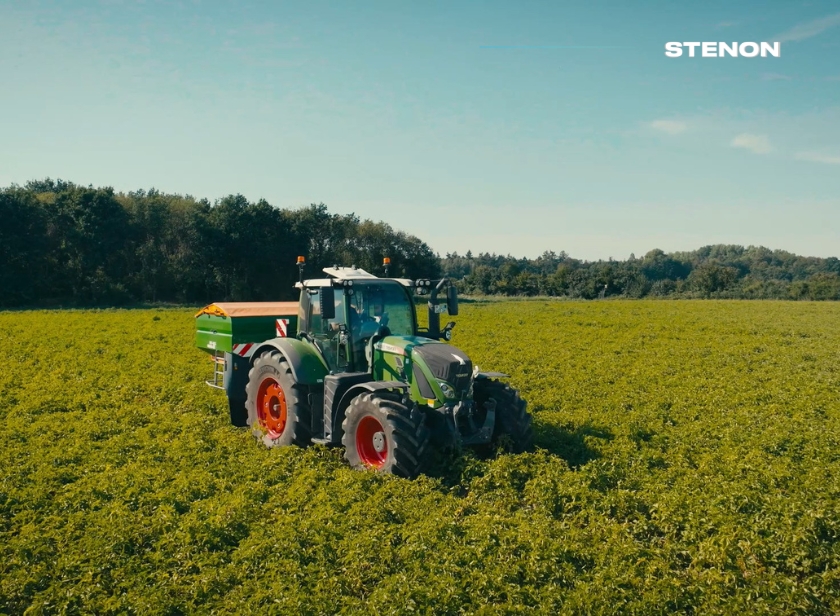
Research from the International Fertilizer Association confirms that nitrogen use efficiency in many regions remains below 50 percent; meaning that more than half of applied nitrogen is often not taken up by crops.
In practical terms, this means that a substantial share of fertilizer investment never reaches its intended target: the plant.
Why Nitrogen Is Still So Difficult to Measure
To understand why nitrogen remains so challenging to manage, it is important to look beneath the surface quite literally.
Unlike more stable nutrients, nitrogen is highly dynamic in the soil. Its form and availability change continuously in response to multiple interacting factors, including:
- Soil texture and structure
- Organic matter content
- Temperature and rainfall
- Microbial activity
- Crop residues
As nitrogen moves through the soil system, it is subject to leaching, volatilization, and denitrification. These processes can rapidly reduce plant-available nitrogen, particularly under unstable weather conditions.
The USDA Natural Resources Conservation Service documents how nitrogen losses increase during periods of heavy rainfall and under specific soil conditions. Further scientific background on nitrogen transformations is provided by the University of Minnesota Extension.
As a result, soil tests conducted weeks or months before fertilization often fail to reflect actual field conditions at the moment of application.
Traditional Nitrogen Management: Educated Guesswork
Given this complexity, it is hardly surprising that most nitrogen strategies still rely on indirect indicators.
Typically, fertilization plans are built around combinations of:
- Historical yield data
- Regional fertilizer recommendations
- Pre-season soil sampling
- Visual crop assessments
These tools provide useful guidance. However, they offer only snapshots of a constantly changing system.
Scientific research consistently shows that spatial variability strongly influences nitrogen response.
In practice, two neighboring fields or even two zones within the same field may differ substantially in:
- Residual nitrogen
- Soil moisture
- Mineralization rates
- Root activity
Without continuous measurement, farmers are forced to average these differences and apply uniform fertilizer rates. This “one-size-fits-all” approach simplifies management, but at a cost.
It often leads to inefficient nutrient distribution, missed yield opportunities, and suboptimal returns on investment.
The Environmental Dimension of Nitrogen Guessing
The consequences of nitrogen mismanagement extend well beyond farm economics.
Excess nitrogen contributes to:
- Nitrate contamination of groundwater
- Eutrophication of surface waters
- Nitrous oxide emissions, a potent greenhouse gas
According to the Intergovernmental Panel on Climate Change (IPCC), agricultural nitrogen use is one of the main global sources of nitrous oxide emissions.
As environmental regulations tighten and sustainability reporting becomes more widespread, nutrient management is increasingly scrutinized by regulators, buyers, and financial institutions alike.
Today, precision in nitrogen management is no longer just an environmental aspiration. It is becoming a core business requirement.
Moving from Estimation to Real-Time Insight
At the heart of traditional nitrogen management lies one fundamental limitation: timing.
Most available data reflects past conditions. Yet nitrogen availability changes continuously, often within days or even hours.
Recent advances in sensor technology and data analytics now make it possible to close this information gap. Real-time soil analysis provides immediate insight into what is actually happening in the field.Instead of relying on averages and assumptions, farmers can access:
- Actual nitrate and ammonium levels
- Soil moisture status
- Organic matter indicators
- Temperature-adjusted mineralization signals
This transition marks a fundamental shift. Fertilization is no longer a static seasonal plan, it becomes a dynamic management process.
How Real-Time Soil Analysis Changes Nitrogen Decisions
With real-time soil analysis, nitrogen decisions are no longer based on historical expectations. They are grounded in current field conditions.
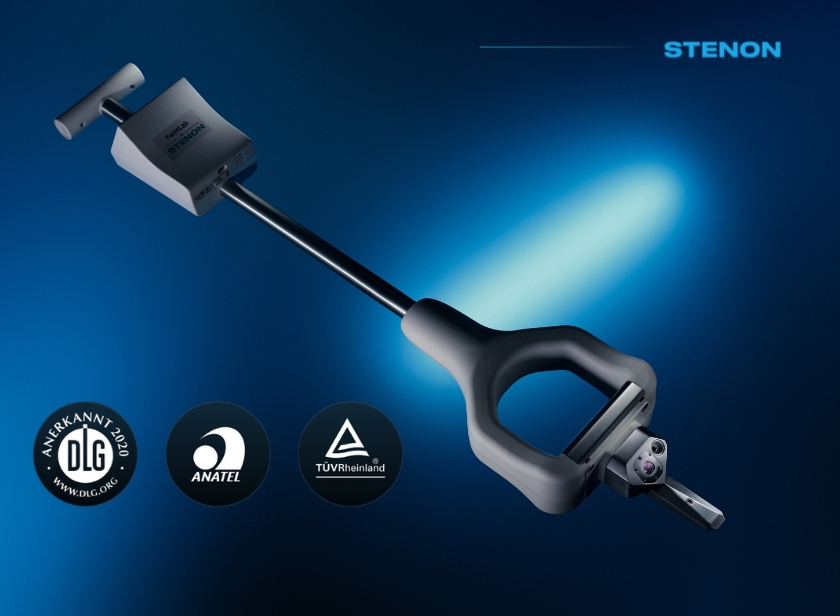
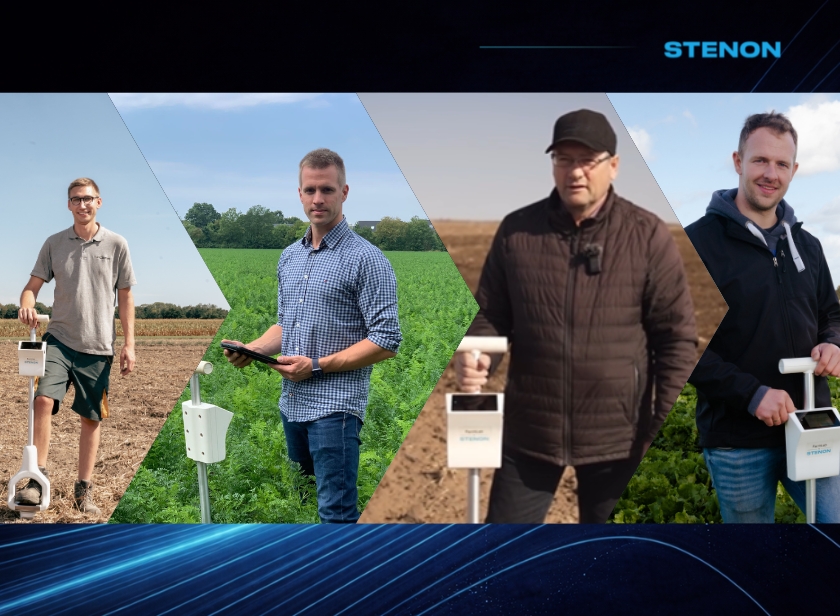
Tools such as Stenon FarmLab enable direct, in-field measurement of soil nutrients within minutes, delivering immediate insight into nitrogen availability. Stenon’s technology has been independently validated and certified and is already used across millions of hectares worldwide.
By combining instant measurements with agronomic models, farmers can:
- Adjust fertilizer rates to actual crop demand
- Reduce unnecessary applications
- Improve nutrient uptake efficiency
- Increase yield stability
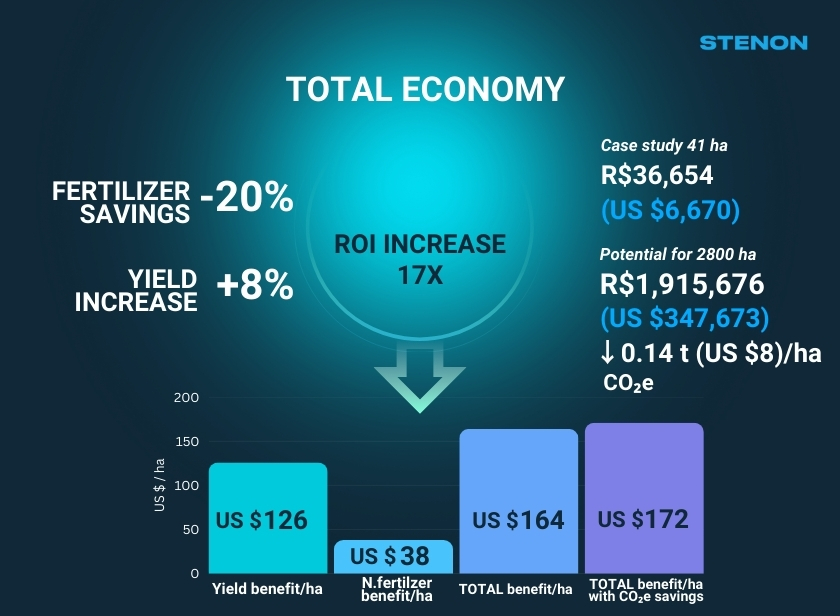
Stenon case studies from Brazil, Germany, and Central Asia document nitrogen savings of up to 40 percent while maintaining and in many cases increasing yields.
From Guessing to Managing Nitrogen Strategically
When nitrogen decisions are guided by real data, fertilization shifts from a risk factor to a strategic advantage.
Farmers using real-time soil analysis consistently report long-term benefits, including:
- Lower input costs
- Higher fertilizer return on investment
- Improved soil health
- Better regulatory compliance
Recent research on precision nutrient management confirms that optimizing nutrient application improves productivity while reducing environmental impacts such as nutrient runoff and greenhouse gas emissions. By synchronizing nutrient supply with plant demand following the principles of the right rate, right timing, right place, and right source precision management enhances both profitability and sustainability.
The Future of Nitrogen Management Is Data-Driven
As agriculture continues to digitalize, the era of nitrogen guesswork is steadily coming to an end. McKinsey & Company identifies data-driven farming as a key driver of long-term productivity and profitability.

Real-time soil intelligence enables farmers to respond quickly to changing field conditions, optimize inputs, and protect both profitability and natural resources.
In a sector where every kilogram of fertilizer matters, moving from estimation to measurement is no longer optional. It is a decisive competitive advantage.
About Stenon
Since its founding in 2018, Stenon GmbH, based in Potsdam, Germany, has become the global market leader in real-time digital soil data that is especially beneficial for agricultural producers, consultants and precision agriculture businesses. With its sensor- and cloud-based mobile measuring device FarmLab, Stenon provides agriculture businesses with essential data to make optimal and sustainable cultivation decisions, boost yield, crop quality and soil health while saving money on inputs.