Nitrogen Fertilizer Crisis: How Farms Adapt to Survive

Nitrogen fertilizer has become one of the most strategically important  and financially dangerous inputs in modern agriculture.As explored in our previous articles on the global nitrogen fertilizer crisis and fertilizer logistics disruption, the market is being reshaped by rising urea prices, geopolitical instability, energy market volatility, and increasingly fragile global supply chains.

Reuters reported that in April 2026 India received urea offers clustered around $1,000 per metric ton, with some bids reaching $1,136 per ton. India ultimately contracted imports at $935–959 per ton, compared with $508–512 per ton only two months earlier [1].

But unlike many other industrial inputs, fertilizer is not optional.

For most field crops, nitrogen directly determines yield potential. And yield is not only the foundation of farm profitability,  it is the foundation of global food production itself.

This is why the fertilizer crisis extends far beyond agriculture.

When fertilizer prices rise dramatically while grain prices remain under pressure, entire farming businesses become economically vulnerable. Farmers are squeezed between volatile input costs and commodity markets they cannot control. And increasingly, many operations simply cannot absorb the pressure any longer.
The consequences are already visible. In the United States, more farmers filed for bankruptcy in the first quarter of 2025 than in any full year since 2021 [2].

At the same time, rising input costs are increasingly affecting day-to-day production decisions. A recent nationwide survey conducted by the American Farm Bureau Federation among more than 5,700 producers found that around 70% of U.S. farmers report they cannot afford to purchase all the fertilizer they need for the season [3]. 

And this is not only a farm-sector problem.
If farms reduce production, delay planting, cut fertilizer rates, or leave acreage idle, less food ultimately reaches the market. The result is pressure across the entire food supply chain from grain availability and livestock feed to food prices for consumers.

And this is no longer a theoretical risk. International institutions are already warning that sustained fertilizer inflation is beginning to influence planting decisions and future food affordability. The FAO reported that rising fertilizer costs are contributing to expectations of reduced wheat acreage in 2026, as some producers shift toward less input-intensive crops [4]. 

Looking further ahead, the FAO warns that if high input costs persist and farmers continue producing with fewer inputs, lower yields later this year and into 2027 could translate into higher food commodity prices and retail food inflation for several years [5].

The World Bank has also warned that the current commodity environment could intensify this pressure: fertilizer prices are projected to rise further in 2026, driven by urea costs, increasing the risk of weaker agricultural output, additional inflation, and worsening food insecurity. Under prolonged disruption scenarios, millions more people could face acute food insecurity globally [6].
In other words, the nitrogen fertilizer crisis affects not only agriculture. It affects food security itself.

So the key question becomes: How can farming businesses survive  and continue producing profitably  in an environment where one of their most essential inputs has become one of their greatest financial risks?

Read More
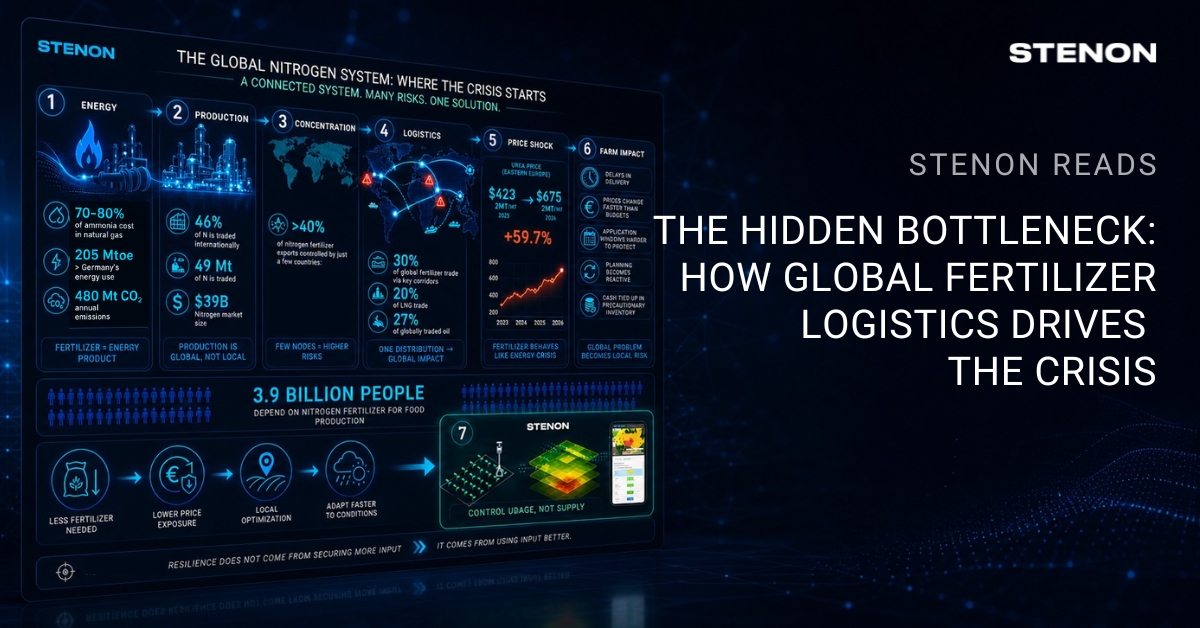
The Hidden Bottleneck: How Global Fertilizer Logistics Drives the Crisis

Nitrogen fertilizer has already emerged as one of the most volatile inputs in modern agriculture. As discussed in our previous article, rising prices and constrained supply have reshaped how farmers plan their seasons and manage risk.

But there is a deeper layer to this crisis, one that is often overlooked.

It is not only about how much fertilizer is produced.
It is about how it moves.

Because in today’s globalized system, fertilizer is not consumed where it is produced. It travels across continents through ports, pipelines, and shipping lanes before it ever reaches the field. And when that movement is disrupted, the consequences ripple across the entire agricultural system.

Read More

The Global Nitrogen Fertilizer Crisis and How Precision Data Changes the Equation

Nitrogen remains the backbone of modern agriculture. It is the nutrient most closely tied to plant growth, yield formation, and ultimately farm profitability. Yet, as explored in our previous article “Why Nitrogen Is Still the Most Expensive Guess in Farming”, it is also one of the least precisely managed inputs in the field.

Today that uncertainty is no longer just an agronomic challenge, it has become a global economic risk.

Read More

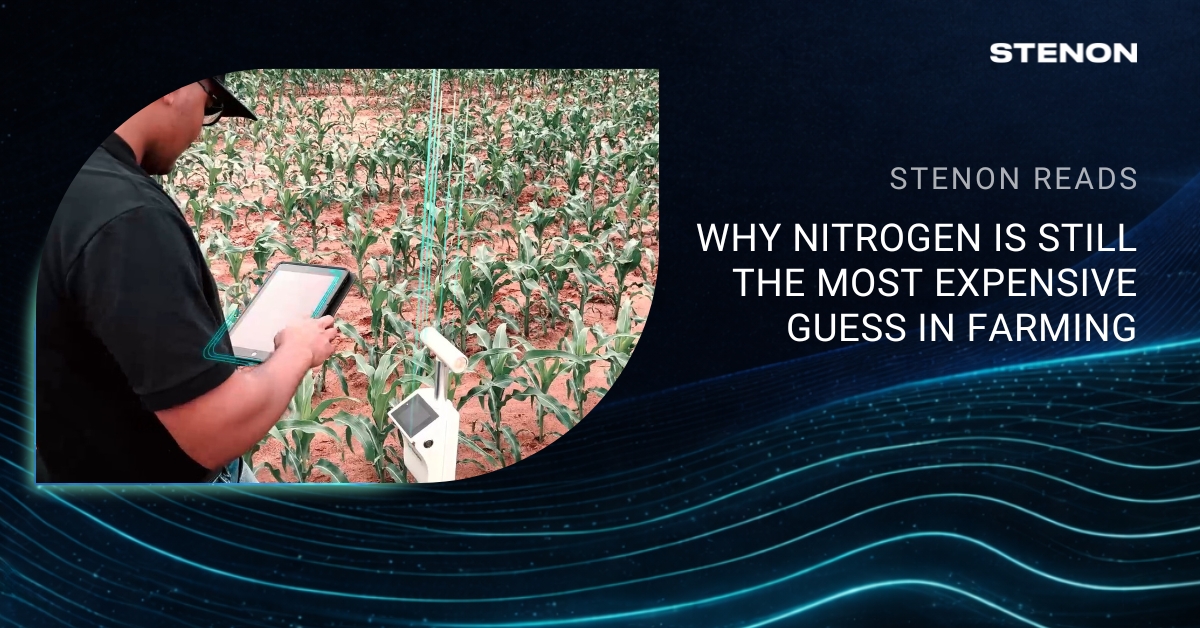
Why Nitrogen Is Still the Most Expensive Guess in Farming

For decades, nitrogen has been one of the most powerful drivers of crop productivity. It fuels plant growth, supports protein formation, and directly influences yield potential. Few inputs have such a direct and measurable impact on farm performance.

And yet, despite its importance, nitrogen management in many parts of the world is still based largely on estimates.

Even today, as agriculture becomes increasingly digital, many fertilization decisions continue to rely on historical averages, regional recommendations, and intuition developed over years of experience. Satellite imagery, connected machinery, and farm management platforms are now widely available, but when it comes to nitrogen, guesswork often remains the foundation.

In an industry where margins are tight and input prices remain volatile, this reality has consequences. Quite simply, nitrogen has become one of the most expensive “guesses” in modern farming.

Read More

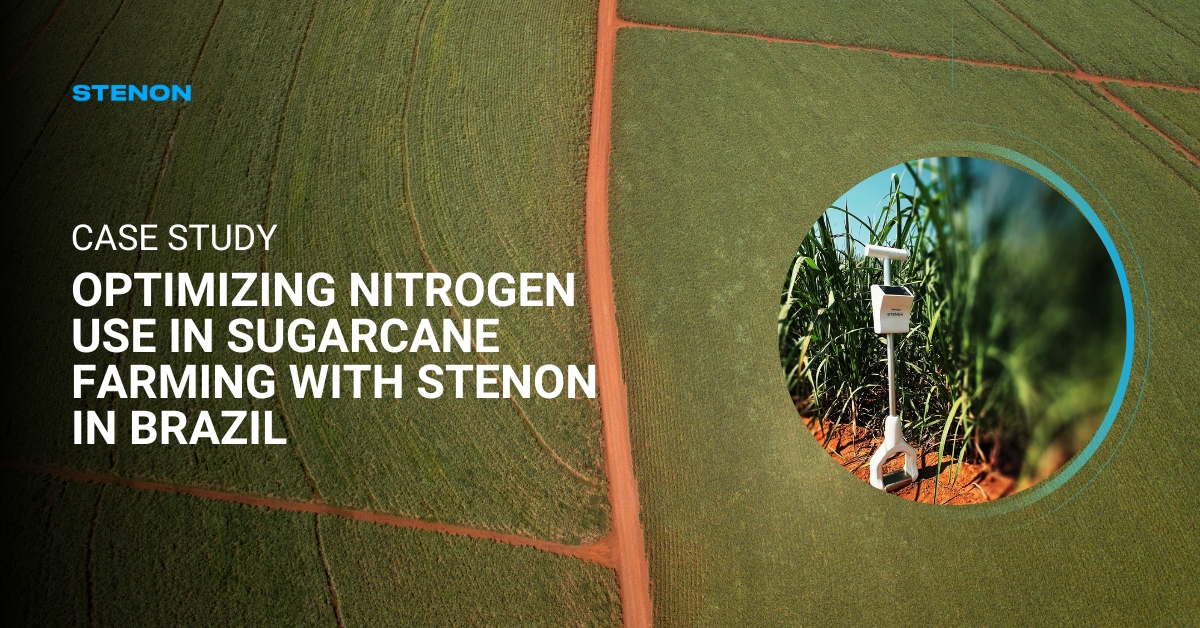
Case Study: Optimizing Nitrogen Use in Sugarcane Farming with Stenon in Brazil

We are excited to share the recent case study for sugarcane growers. At Fazenda Nossa Senhora da Conceição in São Manuel, Brazil, Stenon’s real-time soil analysis technology helped reduce nitrogen fertilizer usage by 58%—without compromising crop health.

*Por favor encontre a versão em português do artigo abaixo da versão em inglês.

Read More

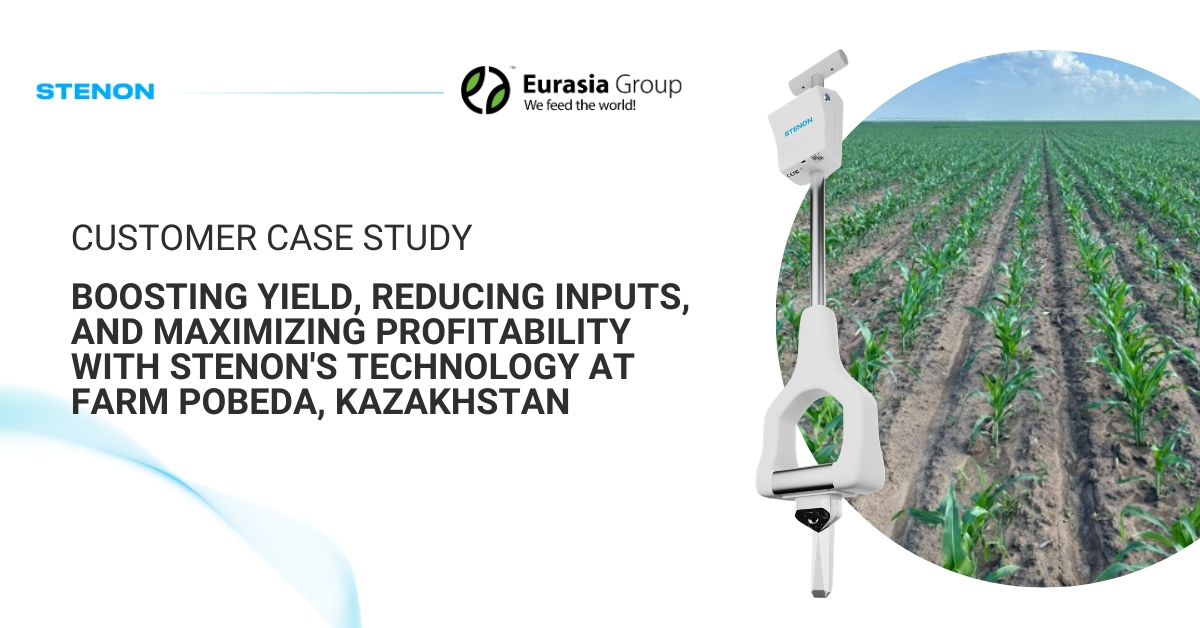
Customer Case Study: Boosting Yield, Reducing Inputs, and Maximizing Profitability with Stenon’s Technology at Farm Pobeda

Continuing our series of Stenon customer success stories and case studies, we are excited to share our latest case study conducted at Pobeda farm in Kazakhstan in collaboration with our partner, Eurasia Group.

Read More

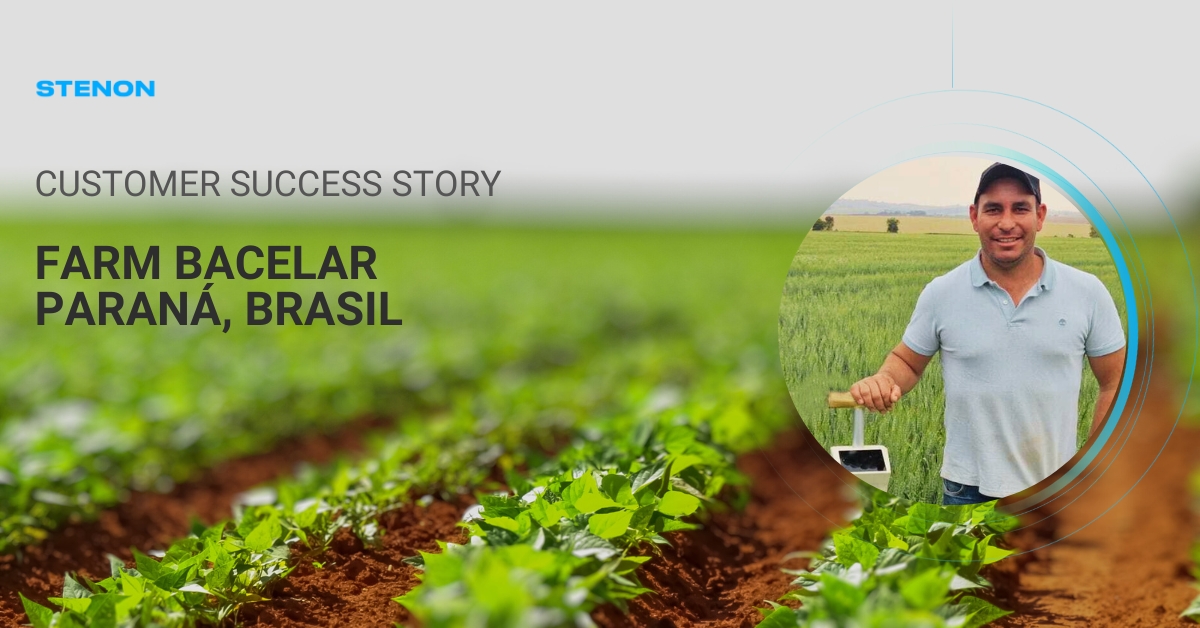
Customer Success Story: Farm Bacelar in Paraná, Brasil

Continuing our series of Stenon customer success stories, we are excited to share the recent achievements from Mr. Marcelo Bispo, manager of Bacelar Farm in Paraná, Brazil.

*Por favor encontre a versão em português do artigo abaixo da versão em inglês.

Read More

Stenon News for Agriculture Experts – October 2023

“It is only the farmer who faithfully plants seeds in the Spring, who reaps a harvest in the Autumn,” said B. Forbes, and we are here at this important time of the year to help you improve your operational efficiency. We aim to accomplish this not only by providing innovative technology solutions for agriculture businesses but also by sharing valuable insights on optimizing your fertilization strategies, highlighting the advantages of the latest breakthroughs in soil analysis, and presenting real-world examples of how cost savings and increased yields can be achieved.

This article is jam-packed with news about recent updates of Stenon’s solution, practical fertilizer recommendations and intriguing studies conducted in various regions.

Stay tuned and enjoy the read!

DE version
PT version
RUS version

Read More

Stenons Ratschläge aus der Landwirtschaft – August 2022: Datengenauigkeit und Nachhaltigkeit

Diesen Monat bieten wir Ihnen in der aktuellen Ausgabe von “Stenons Ratschläge aus der Landwirtschaft” mehrere Leseempfehlungen, die sich nicht nur mit unserem FarmLab befassen, sondern auch einen Einblick in Theorie und Praxis geben. Erfahren Sie mehr über die Bedeutung von Datengenauigkeit und Nachhaltigkeit für die Bodengesundheit.

Read More

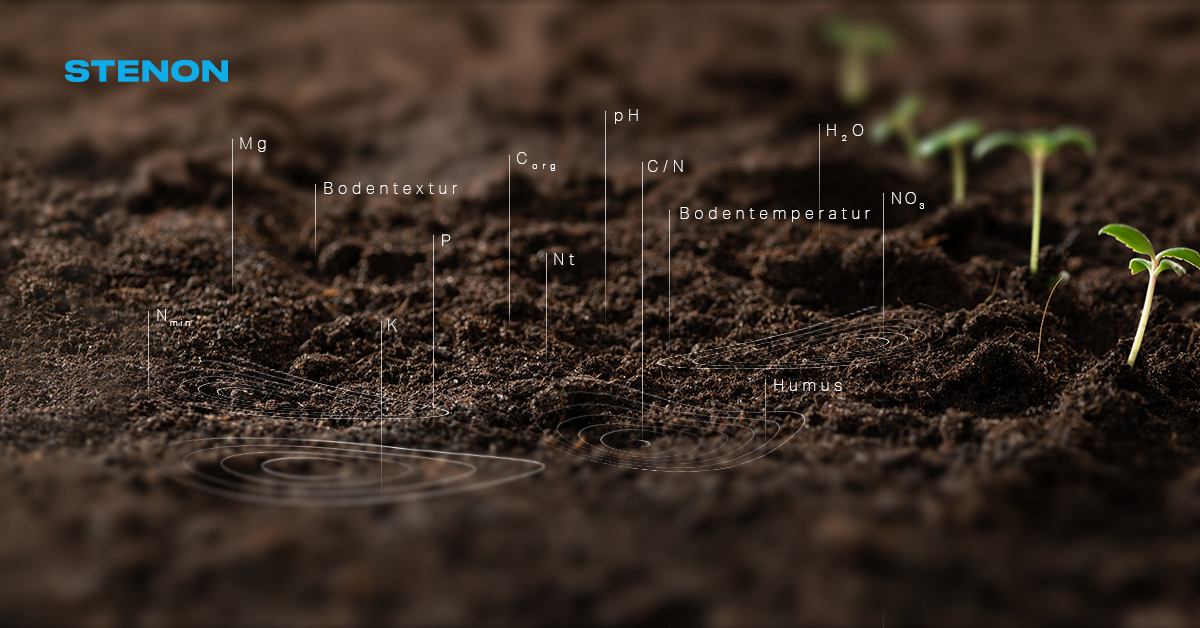
Wichtige Bodeneigenschaften in der Landwirtschaft – Kurzbeschreibung für Kunden

Neben der neu aufgelegten Reihe “Stenons Ratschläge aus der Landwirtschaft” befassen wir uns in dieser neuen Artikelserie mit einer Auswahl wichtiger Bodeneigenschaften in der Landwirtschaft. Damit unsere Kunden und interessierten Leser einen Überblick erhalten, hat unsere wissenschaftliche Abteilung eine Reihe von Kurzbeschreibungen zusammengestellt.

Read More

Stenons Ratschläge aus der Landwirtschaft – Juli 2022: Help-Center und Düngestrategie

In der Blog-Serie “Stenons Ratschläge aus der Landwirtschaft” präsentieren wir Ihnen jeden Monat Empfehlungen und Neuigkeiten rund um das FarmLab und die Agrarwirtschaft. Im Juli erfahren Sie im Folgenden alles Wissenswerte zu unserem neu etablierten Help-Center, der Bedeutung einer funktionierenden Düngestrategie und welcher Mittel es für optimales Pflanzenwachstum bedarf.

Read More

Weit weg von einem praxistauglichen Vergleich

Der Artikel der “profi” mit dem Titel “Weit weg vom Labor” beruht auf einer fehlerhaften Untersuchung und in vielen Punkten auf unvollständiger Recherche. “profi” vergleicht den Stenon-Bodensensor mit Labormessungen und verkennt dabei, dass die Untersuchungen nicht am exakt gleichen Boden erfolgen können. Die kleinräumigen Bodenunterschiede werden fälschlich als Messfehler des Gerätes interpretiert. Weiterhin werden im Artikel mehrfach negative Wertungen und Behauptungen vorgenommen, ohne dass diese belegt sind. Dies hat mit objektiver Berichterstattung wenig zu tun. „profi“ trifft außerdem wiederholt falsche Aussagen zu Fakten, die einfach überprüfbar gewesen wären.

Read More

Neues von Stenon – Mai 2022: Digital Farming und Wettbewerb

Die Fachwelt ist sich einig: An Digital Farming führt kein Weg vorbei, wenn Landwirte in Zukunft fit für den Wettbewerb bleiben oder ihn sogar aktiv gestalten wollen. Bei welchen Aspekten Landwirte die größten Vorteile erwarten und wie viele von Ihnen bereits von digitalen Methoden profitieren, erfahren Sie in diesem Beitrag. Außerdem verraten wir Ihnen, wo und wie Sie kostenlos mit eigenen Händen und Augen erleben können, was Digital Farming Ihnen bringt.

Read More