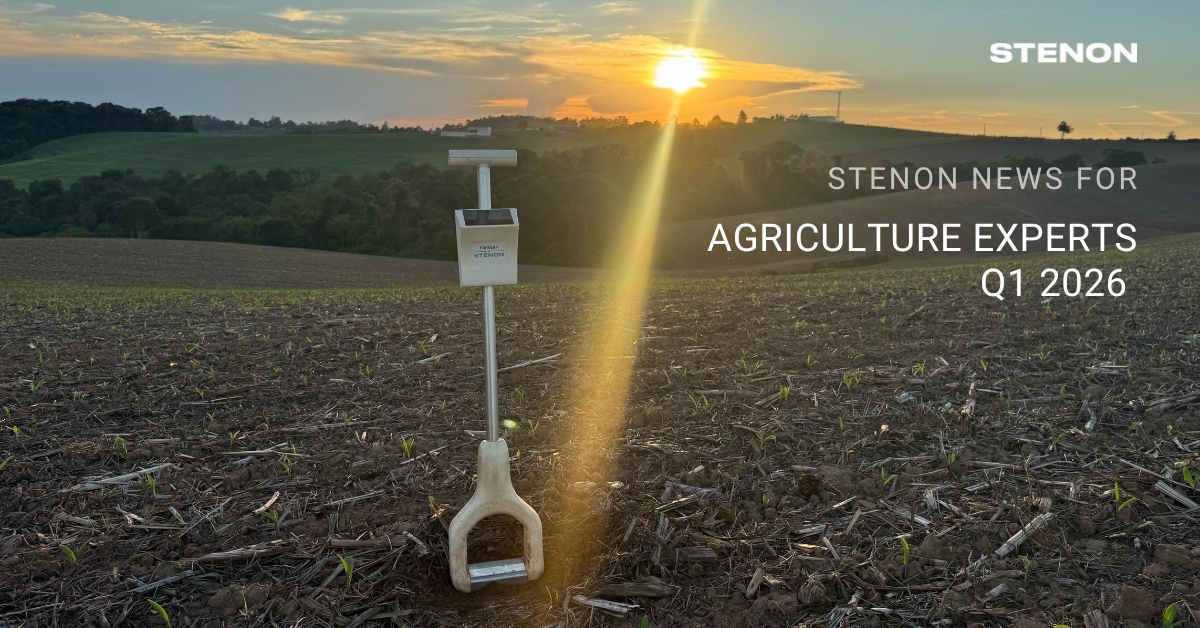
As the new season begins, we would like to share the latest developments from across our global activities and also introduce an important change. Starting this year, we are moving from a monthly to a quarterly news format. This will allow us to bring you more substantial updates, deeper insights, and meaningful highlights in each edition while respecting how busy daily life in agriculture can be.
In this issue, we take you to Berlin, where together with the German Agribusiness Alliance, we joined international leaders to discuss one of agriculture’s most pressing challenges: sustainable resource management. We also share the latest improvements to the Stenon WebApp, including new export capabilities and further refinements to variable rate application and crop-specific recommendations.
From Brazil, we highlight a recent article by our CEO, Niels Grabbert, published in Notícias Agrícolas, where he explores why precision agriculture is becoming essential for profitability and sustainability in one of the world’s most important farming regions. And finally, in our Reading Tip, we introduce the first article in our new in-house series, taking a closer look at why nitrogen management remains one of the biggest uncertainties in modern farming and what is beginning to change.
So, wherever you are reading this, in the office, on the farm, or between seasons, we invite you to take a few minutes and explore the latest news from Stenon.
Enjoy the read.
DE version
PT version
RUS version
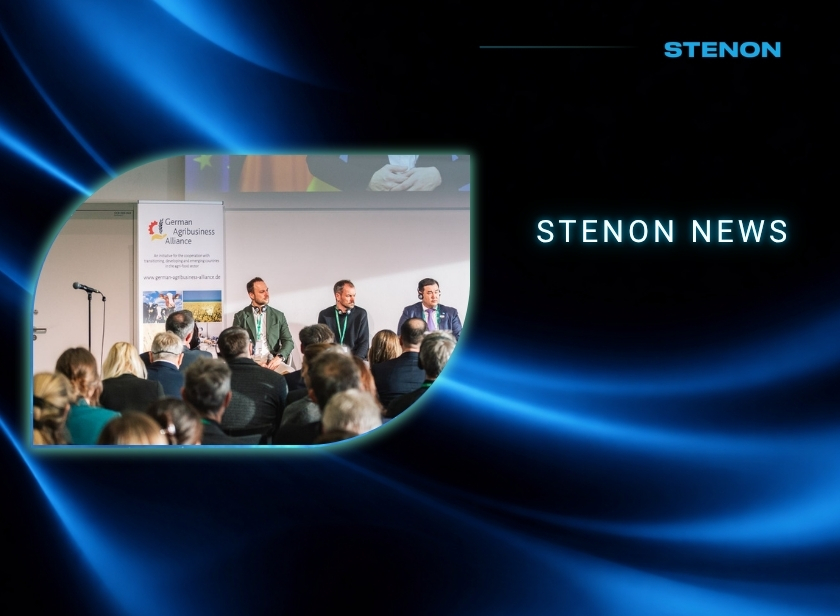
Since joining the German Agribusiness Alliance (GAA) last year, Stenon has become part of a strong network of companies, researchers, and policymakers working together to shape the future of agriculture beyond national borders. The alliance serves as a platform to exchange knowledge, build partnerships, and support agricultural development, particularly in regions such as Eastern Europe and Central Asia, where improving productivity and resource efficiency is critical for long-term food security.
For Stenon, this is more than a formal membership. It is an opportunity to bring real-time soil intelligence into conversations that directly influence how agriculture evolves in the coming years and to learn from partners facing very different agronomic and environmental realities.
This dialogue continued in January at the Global Forum for Food and Agriculture (GFFA) 2026 in Berlin, held alongside one of the industry’s key events, Grüne Woche. During a panel organized by the GAA together with the Leibniz Institute of Agricultural Development in Transition Economies (IAMO), experts from across the sector came together to discuss one of the most sensitive and urgent topics in agriculture today: how to use water more sustainably while maintaining productivity.
Our CEO, Niels Grabbert, joined the discussion and shared Stenon’s perspective on the role of real-time soil data. Because in the end, water and nitrogen management cannot be separated. Both depend on understanding what is actually happening in the soil not relying on assumptions, but on measurements. With access to real-time data, farmers can make more confident decisions, use resources more efficiently, and better protect both their yields and their soils.
What also stood out is the important role the German Agribusiness Alliance plays in bringing the right people to the same table. Through regular panels, working groups, and international exchanges like this one, the alliance creates space for practical dialogue and collaboration that helps move the industry forward. We look forward to continuing these conversations and will keep you updated on the next sessions and insights to come.
Product Update: Enhanced Nutrient Maps, SHP Export Improvements and Smarter VRA Zones
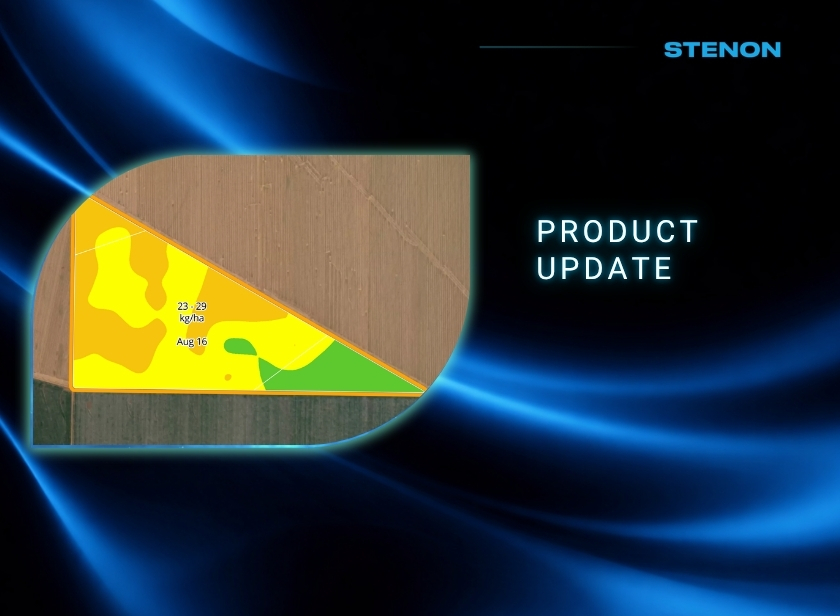
Over the past months, we have continued to refine our agronomic software with a clear focus on making Stenon’s data easier to interpret and even more practical to use in daily farm operations. Following the introduction of our enhanced isoline visualization at the end of last year which replaced rigid grid maps with smoother, more natural contours we have now taken the next step by improving how this data can be exported and used beyond the Stenon platform.
Users can now export SHP files featuring the same vectorized isolines visible in the WebApp, replacing the legacy grid-based export format. This update, already available in Brazil, Central Asia, Greece and California, ensures that nutrient maps integrate more seamlessly with farm management systems and variable rate application equipment. The result is a cleaner, more precise representation of field variability that aligns with professional agronomic workflows and enables more accurate input application in the field.
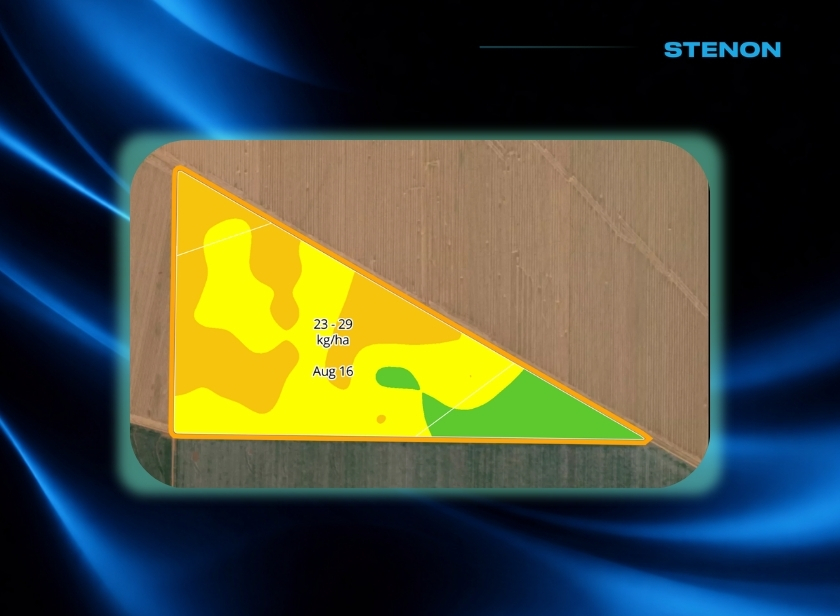
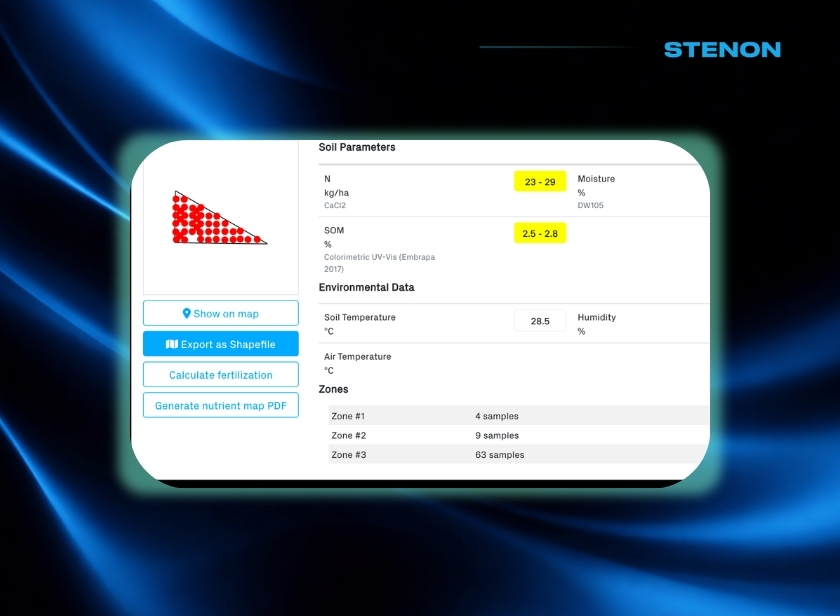

We’ve upgraded our VRA zone logic to better bridge the gap between data and the field. Instead of over-segmenting based on raw data alone, our algorithm now clusters application rates and merges zones that require the same amount of fertilizer. This prevents the field from being fragmented into ‘micro-zones’ that don’t actually require different treatments. The result is a more practical map that focuses on significant changes in application rather than minor data fluctuations.
In addition to these mapping improvements, we continue to expand and localize our fertilizer recommendation engine based on feedback from farmers and agronomists. In Greece, where Stenon is increasingly used across diverse cropping systems, we have added four additional crops: onion, garlic, lettuce, and cabbage. This allows growers to generate precise, crop-specific fertilizer recommendations based on real-time soil measurements, tailored to local agronomic practices.
These updates reflect our ongoing commitment to translating real-time soil data into clear, actionable insights and to continuously improving the Stenon’s WebApp based on the realities farmers face in the field.
Precision Agriculture in Brazil: Improving Nitrogen Management and Farm Profitability
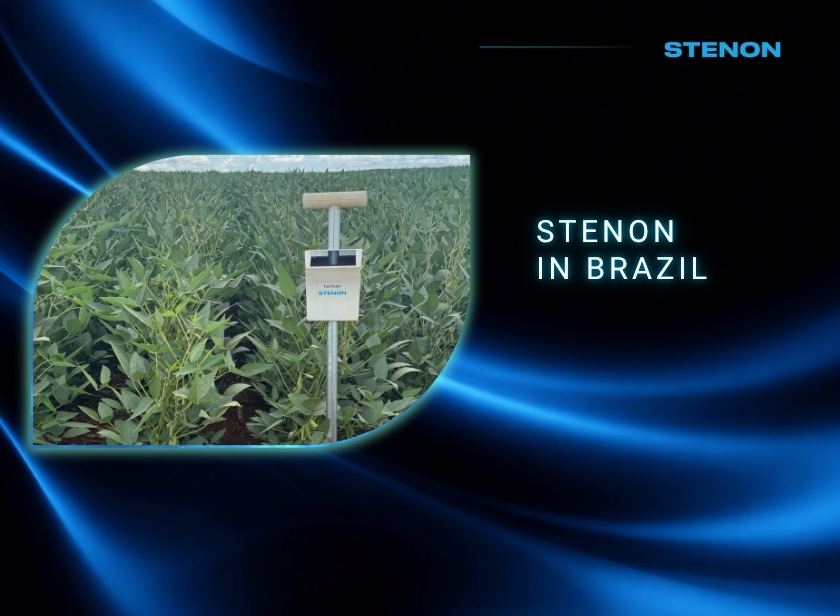
Brazil remains one of the most dynamic and important agricultural markets in the world and at the same time, one of the most demanding when it comes to managing inputs efficiently across large and highly variable farming areas. This is exactly the context addressed by our CEO, Niels Grabbert, in his recent byline article published in Notícias Agrícolas, one of the country’s leading agribusiness media platforms.
In the article, published in Portuguese, Niels explores why precision agriculture is becoming a key pillar for the future of Brazilian farming. He focuses in particular on one of the most complex and costly decisions farmers face: nitrogen management. In a reality where fertilizer represents a significant share of production costs, and where field variability can be extreme, relying on estimates is no longer enough.
The article explains how access to reliable, real-time soil data allows farmers to move beyond generalized recommendations and manage fertilizer based on actual field conditions. This not only helps reduce unnecessary input use and avoid waste, but also protects yield potential and improves overall profitability. At the same time, more precise nitrogen management contributes to reducing environmental impact — an increasingly important factor for the long-term sustainability and global competitiveness of Brazilian agriculture.
While this public dialogue is essential, our work in Brazil continues directly in the field. Our local team of agronomic experts is currently conducting a new series of case studies together with farmers and partners across different regions and crops. These trials help quantify the agronomic and economic impact of real-time soil analysis under real farming conditions.
Equally important, they allow us to listen. The feedback collected from farmers and agronomists flows directly back to our product team, helping us continuously refine and improve our solutions based on practical experience.
We look forward to sharing the results of these case studies with you soon.
Why Nitrogen Is Still the Most Expensive Guess in Farming
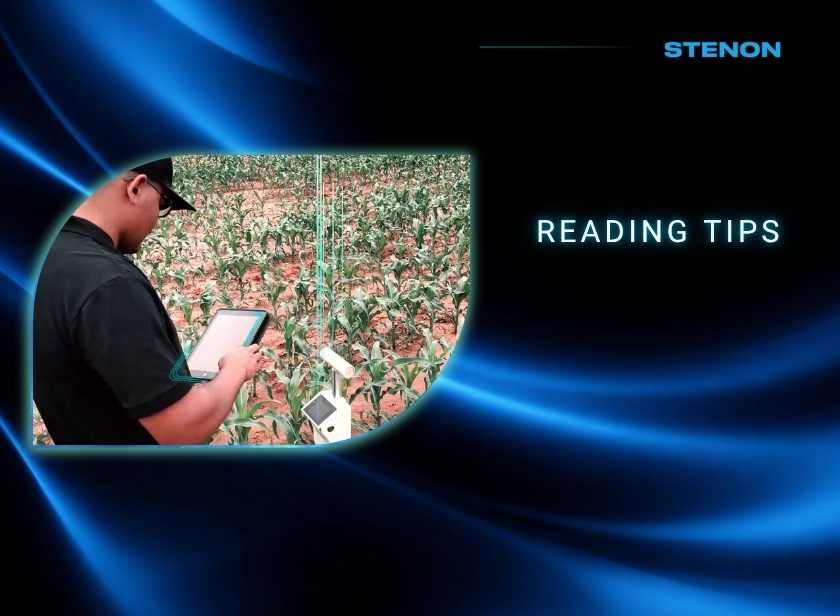
Nitrogen is essential for crop growth, yet managing it remains one of the most costly and uncertain decisions farmers make. In our latest blog article, we take a closer look at why measuring nitrogen accurately is still such a challenge, and how traditional fertilization practices often rely on averages, historical data, or visual field impressions rather than the actual conditions in the soil.
The article explores the hidden financial risks of this approach, as well as the environmental consequences of over- and under-fertilization. At the same time, it shows how new digital technologies are beginning to close this gap by bringing real-time soil insights into everyday decision-making. This publication marks the first article in our new series, where we unpack the most important questions in modern nutrient management. In the next piece, we will focus on practical recommendations and concrete strategies to help improve nutrient management in the field.
About Stenon
Founded in 2018 and headquartered in Potsdam, Germany, Stenon GmbH is the global leader in real-time digital soil data. Our innovative device, FarmLab, provides essential soil insights to optimize yields, improve soil health, and reduce input costs. Designed for input retailers, machinery dealers, agricultural consultants, and food producers, we empower businesses to drive efficiency, sustainability, and success across the agricultural value chain.
More about Stenon at www.stenon.io